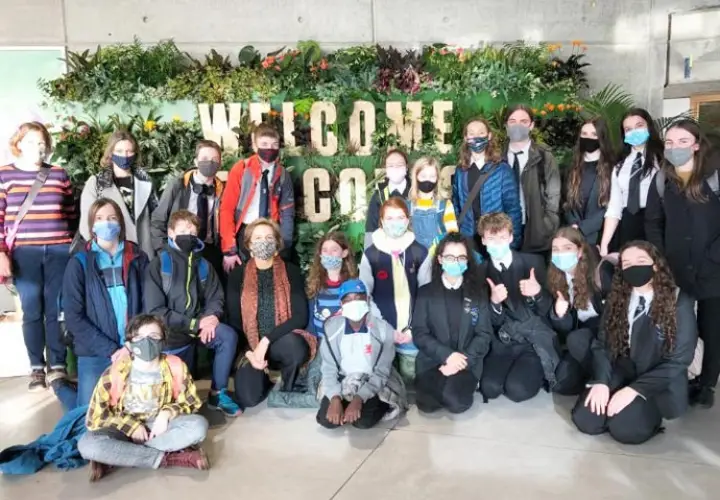
After a forced hiatus from meeting during the lockdowns of last year, Portobello High School Eco Committee were determined to get back to work and have spent the past few months raising awareness about the climate crisis at school and participating in activities around COP26.
There seemed to be a mutual understanding between these two groups who are, or will be, the most affected by climate change, and who are currently shut out of the decision-making process.
In the Green Zone
Walking through Glasgow on November 9th, where they had been invited to attend an event in the Green Zone, there was a palpable sense of growing excitement. Passing the barricades and parked police vehicles at the Blue Zone where delegates inside hashed out the details of the agreement and protestors lined the streets, the magnitude of the occasion seemed to dawn on everyone.
Mock COP
A month previously, alongside students from all 4 UK Nations, 6 members of the committee were selected to participate in a MOCK COP organised along United Nations protocols and designed to encourage young people to think critically about the climate crisis. The team were then invited to the Green Zone where recommendations, cooperatively agreed at the mock summit, were presented in front of an international audience.
These students have learnt to look critically into the details and unpick the soundbites and the feeling that seems to have settled in the aftermath is that not enough has been achieved at COP26.
With their newly increased awareness of the global nature of the climate crisis the students heard speeches and posed questions to Youth Climate Activists and campaigners. They also heard moving stories from Indigenous leaders on the front line of climate change who thanked young people for their engagement and support. There seemed to be a mutual understanding between these two groups who are, or will be, the most affected by climate change, and who are currently shut out of the decision-making process.
Good Morning Britain
Three days after returning from Glasgow, the team were in school before dawn, preparing to be interviewed for Good Morning Britain about their experiences at COP26. In turn each student was asked how they felt about what had been achieved at the summit and the resounding response was one of disappointment and let down.
Despite initial excitement over agreements reached in the first few days, these students have learnt to look critically into the details and unpick the soundbites and the feeling that seems to have settled in the aftermath is that not enough has been achieved at COP26 and those with the power to make the decisions have fallen short again.
Youth activism has become a word for people with fresh ideas and these students aren’t prepared to take no for an answer.
Youth activism
Through these activities the Eco Committee has been able to develop a greater understanding of the complexities of the problems we face, but it was the passion and commitment of the youth activist leaders that has seemed to make the most impact and offer a model to aspire to.
Youth activism has become a word for people with fresh ideas and these students aren’t prepared to take no for an answer. They maintain a ‘no-excuses’ position; difficult or not the climate crisis is here, it is real, and more must be done. The actions of young people have brought climate change to the attention of world leaders and these young people have left COP26 with even more drive to push forward, and an increased belief that where current decision makers have failed, young people can step up and succeed.