“True peace is not merely the absence of war, but it is the presence of justice.” Martin Luther King
Children and young people in Scotland are increasingly aware of global conflict, and its impacts, as it filters into their social media feeds, is visible in local protests and divisive actions, pushes up the cost of living, or through their own personal connections with countries experiencing war. How we address this in our schools and provide spaces where young people can discuss, reflect and learning about global conflict is challenging and requires both confidence and tools to navigate well.
Often this can throw up more questions than answers. What are our responsibilities when we discuss conflict-related violence and displacement with young people? How do we ensure dignity and solidarity are central to our practice? What pedagogical approaches support critical engagement and show peacebuilding as a process that can bring lasting change?
Conflict: classroom or world
For young people the world can seem difficult to handle both at a personal and a global level, but they should not be sheltered from difficult issues – it is important for them to clarify their emotions and thinking for themselves. While human rights make a useful lens to explore some issues of conflict, it can be challenging to deal with the more emotive and difficult aspects of war and conflict which are reported in the news and the harrowing images used. Sometimes providing a safe space to explore these difficult and complex issues is useful, as is the acknowledgement that as adults and teachers we don’t know the answers and solutions to global issues.
A simple but effective exercise can be to consider the sources of conflict. These can be narrowed down to a few; land disputes, politics, religious and cultural differences and the distribution of resources. The next step can be to place these sources of conflicts into a more familiar setting; the classroom. A simple activity connecting classroom issues to global issues can help them see that local conflicts have the same roots as global ones: conflicts over resources, differences of opinions, sharing a space in the story corner, understanding difference.
Similarly, Restorative Justice and the use of peer mediators offer approaches to promoting harmonious relationships in schools and can lead to the successful resolution of conflict and harm. You can find out more on the Education Scotland website.
Remembering the past to make a better future
Many schools mark Remembrance Day on 11 November, and it provides a context for reflecting on the ongoing conflicts and wars around the world as well as remembering the past. Poppy Scotland produce a range of teaching materials at all levels which highlight the continuing need for Remembrance and its ongoing relevance today and for future generations.
Some schools have started to shift the focus from WWI/WWII Remembrance and the centennial commemorations towards more complex and inclusive ‘Conflict and Resolution’ based framework. It can work well as an IDL where individual subjects incorporate a range of conflict contexts, including the Remembrance Day ceremonies, while also critically examining the wider role and impact of war in all areas of society, past and present, highlighting the exploitation and abuse by major world powers in colonial and post-colonial legacies. There are a number of useful resources which provide a decolonial approach to teaching about WW1 and WW11. The UK Punjab Heritage Association have created this excellent resource Empire, Faith and War. Colourful Heritage focusses on the role of the British Indian army, while the Teach for Tomorrow resources look at Sikh soldiers in WW1.
Teaching in Times of conflict
Highland One World and Scotdec, in partnership with the Scottish Peace Platform, are currently working on a project which is exploring with schools in Inverness and Edinburgh how they can become spaces where young people can discussion, reflect and understand global conflict through the lens of peace and justice and consider how educators can address these issues in the classroom. The project will consider how educators can help young people navigate anxiety about global events, critically evaluate the information they encounter and develop the understanding and skills to engage thoughtfully with a complex and changing world. As part of this work, they are gathering teacher and parent perspectives through a short survey. You can find out more about the project and take the survey here.
Drawing Hope
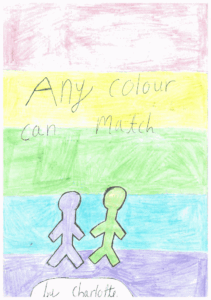
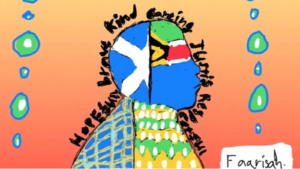
Drawing Hope is an international peace initiative that shares messages of hope through the artwork of children and young people. The project invites us to see one another as fellow human beings, building empathy across conflicting borders, complex ideologies and diverse identities. Through three ready to use peace education sessions, children and young people reflect on identity and what connects us across differences, before creating a self-portrait and message for ‘a friend I haven’t met yet’.
If your school would like to take part and have the opportunity for your children’s artwork to be included in national and international exhibitions during 2027 register here.
Educators for Peace
Educators for Peace are a network of educators in multiple sectors, including schools. Colleges, community education and universities, who are seeking to support younger generations with peace pedagogies that can transform their lives, communities and the wider world. Among their activities, they have sought to help teachers and young people engage with Palestine and the devastation in Gaza through education that challenges stereotypes and centres the experiences and humanity of Palestinians. Its work addresses the lack of confidence and resources that can make teachers hesitant to explore contentious global issues. This includes resources for primary learners to explore Palestinian culture, identity and lived experiences.