
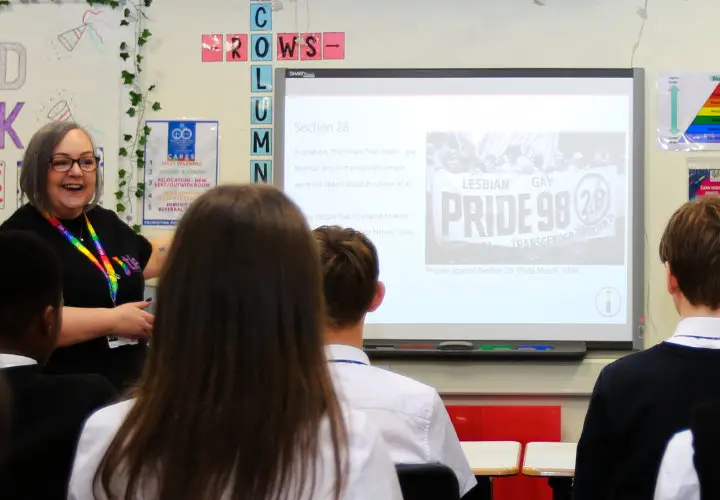
n Scotland 97% of LGBTQ+ pupils have heard homophobic language in schools and 65% of pupils have first-hand experience of homophobic bullying at school.
LGTB Youth Scotland, a national charity that support LGBTQ+ young people in all aspects of their lives, held a survey in 2022 about the life in Scotland for LGBT young people. Only 10% of participants rated their school experience as ‘good’ and 70% of participants reported experiencing bullying due to sexual orientation. This shows that clearly schools need to be addressing these issues properly and consistently.
Teaching pupils about issues the LGBTQ+ community face is important as it teaches other pupils’ acceptance and respect. It teaches pupils about diversity and different family dynamics. As well as other pupils it can help kids who are part of the LGBTQ+ feel less isolated and safer at school. It can help remove the certain stigmas created about people in the LGBTQ+ community.
I interviewed a young person from LGBT Youth Scotland, and this is how they responded to my questions:
- How well do you think your teachers are educated on the topic of LGBTQ+?
I think it depends on the teacher and subject, a lot of the time only teachers that are properly educated on the topics are either LGBTQ+ or it’s prominent in their subject, while for others it can be minimal or close to no education at all. - How important do you feel it is to learn about the topic?I think it’s incredibly important. It helps support others in their life, if that’s in the workplace, at home or in a classroom. It also allows people to feel safer and battle prominent miss conceptions that are often highlighted and used against peoples as well as break down harmful stereotypes.
- How or what do you think could be improved in how LGBTQ+ issues are taught in schools?
I think more real-life stories of people’s experiences should be taught by a variety of people to help educate and allow people to connect and understand better, allowing better representation and overall reaching more people on a personal level. Also small changes in an everyday classroom setting, such as asking about pronouns, helps people feel supported. It is a simple question, that helps so many people, as well as normalising use of pronouns and breaking down negative connotations around it, allowing inclusivity to be extended beyond a classroom setting.
It’s really important to ensure that every kid in schools feels that they have a safe space to feel heard and seen. We need to make sure that teachers inform themselves on such issues, so they are available to support a pupil if needed and have a curriculum that reflects everybody.
For more information and to find out more about the LGBT Charter for Education, visit https://lgbtyouth.org.uk/