Imagine this. A whole room of deaf sign language users chatting animatedly. A hearing man walks in. He can’t sign. He tries to make conversation but cannot make himself understood. Who is disabled?
This discussion forms part of our new resource which aims to build teacher and pupil confidence and literacy around disability. Partnered with the not-for-profit company Toy Like Me, we have been working on these resources for a number of years. Our research shows that the resources change primary school non-disabled and disabled children’s perceptions of disability for the positive: but what does it involve – and why do we need them?
Why is this important?
We started against a backdrop of research showing that disabled people are not frequently represented in children’s classrooms; in the wall displays, in their curriculum materials, in libraries. Alongside that, research told us that teacher confidence, when it comes to talking about disability with their learners, is low. As a disabled researcher, Sian knew that to be true from her own classroom experiences. Support for education professionals is still very much lacking, in having those discussions with learners, and building confidence, disability literacy, acceptance, and belonging.
“Research by Dr Sian Jones has found that after playing with disabled toys for just three minutes, children develop more positive friendship intentions towards their peers with disabilities.”
What we did
Our resource is centred around a chatty pack, to get children thinking and talking about disability. With links to Experiences and Outcomes aimed at second level learners, our approach is one where disability literacy can be embedded by education professionals into their existing practice, rather than something extra to add to the curriculum.
The resource starts with a series of videos. These highlight the Social Model of Disability – that is the level of ‘disability’ a person experiences based on the environmental, social and attitudinal barriers around them – in which the resources are grounded and links to the Professional Learning Framework themes of Equality, Rights, and Relationships, as well as to key reflective questions around learner identities in the National Framework for Inclusion.
“If you took your learners on a learning journey through your school corridors, where and how would they see disabled people represented?”
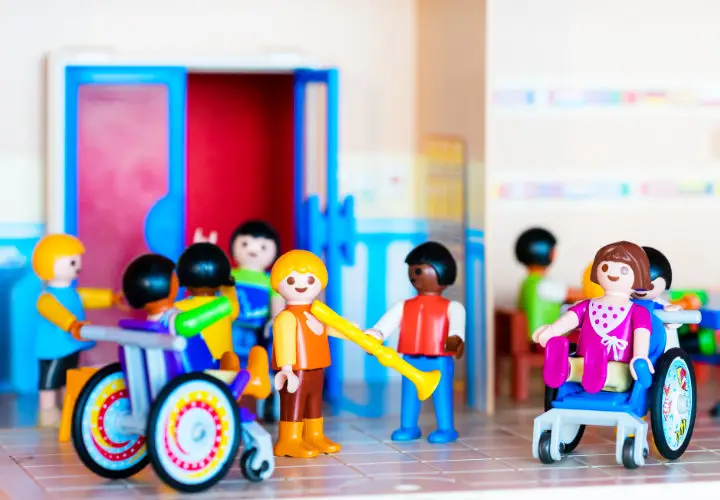
The resources focus on a collection of twelve images representing toys that have an impairment; Olaf has a cochlear implant and Barbie has a prosthetic limb. The class activities, give key subject knowledge for educational professionals alongside conversation starters for learners and encourages playful conversations with learners.
These resources are intended as a guide for practice. Having started the conversation, we’d like you to think about your local context. Is your local playground accessible to all children? Can you redesign it, if it isn’t? If you took your learners on a learning journey through your school corridors, where and how would they see disabled people represented?
“The resources focus on a collection of twelve images representing toys that have an impairment; Olaf has a cochlear implant and Barbie has a prosthetic limb.”
Call to Action
We started with children’s toys, and imagination, but we know that there is scope for much more. How do you think you could use the resources we have made in your practice? Are you interested in developing our resources further, as part of your professional practice? If so, please get in touch by emailing [email protected].