To me, global citizenship means feeling connected to a wider community and a shared humanity. It has helped me understand how political, social, and cultural aspects are interconnected across local, national, and global levels (UNESCO, 2015). Most importantly, being a global citizen gives me a sense of purpose—working collaboratively to ensure everyone has access to knowledge, education, and skills to build a global community where human rights are upheld, gender equality is supported, and cultural diversity is celebrated.
As many of us may know, global citizenship closely aligns with the United Nations Sustainable Development Goals (SDGs)—particularly those related to education, peace, justice, equality, and partnerships. The SDGs are 17 interconnected global goals adopted by all UN Member States in 2015 as part of the 2030 Agenda for Sustainable Development. They serve as a universal call to action to end poverty, protect the planet, and promote peace and prosperity for all by 2030 (United Nations, 2015).
Bridging the gap
However, it seems to me that the discourse of global citizenship—and even that of the SDGs—is often confined within policy and educational settings. This makes me wonder about those who may not have access to such spaces. The conversation often remains among those already aware of their roles, while many others—those working in supermarkets, restaurants, cleaning services, driving buses, or currently unemployed—are left out. Therefore, I see a clear need to bridge these gaps by holding important conversations where people actually live and work—in the real world, far from the conference rooms and parliamentary halls.
To truly address key global issues such as poverty, inequality, health, education, gender equality, clean water, affordable energy, decent work, climate action, and global partnerships, we need collective forces—people from all walks of life.
Building connections
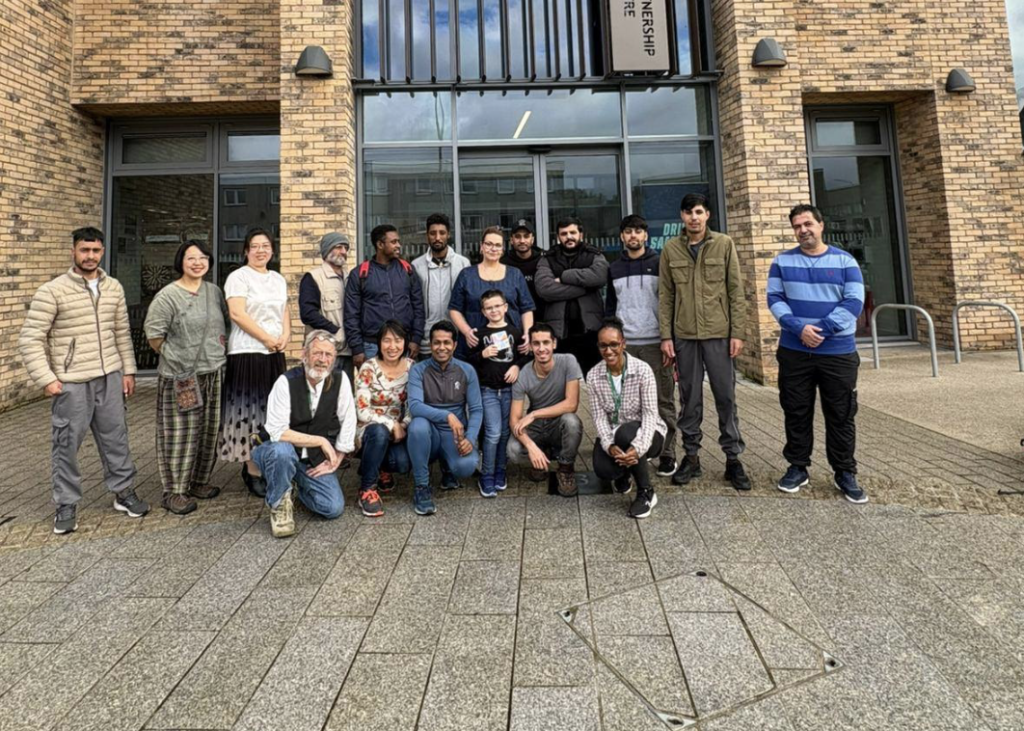
Promoting such collective strength requires building meaningful connections among people from different backgrounds, because a lack of connection often fuels prejudice and creates further segregation within communities. Currently, I am conducting my PhD research to promote connectedness and social cohesion through social mixing activities. This research project will be completed in three phases. In Phase One, 42 participants took part in focus group discussions exploring barriers to meaningful engagement and identifying ways to foster connectedness. Learning from these findings, Phase Two now involves 22 participants engaging in a six-week multicultural cooking workshop. Pre-test and post-test surveys will be used to assess whether such social-mixing activities can promote connectedness and social cohesion across differences.
Celebrating diversity
Beyond my research, I also serve as the Chairman of the West Lothian Community Race Forum, a registered charity that promotes race equality, race awareness, and celebrates diversity across West Lothian. As an organisation, we host a variety of cultural events such as the Lunar New Year Festival, Multicultural Event, and Black History Month, in partnership with organisations including the Chinese Association in Scotland, Police Scotland, West Lothian Council, Czech and Slovakian Group, Indian Community, West Lothian College, and the wider local community. The purpose of these events is to create spaces where people from different backgrounds can connect, learn about one another’s cultures, and build the meaningful relationships needed to foster a sense of global community.
In summary, I am doing my part to connect people so that our differences can be celebrated, and our collective strengths can be harnessed to address current global challenges and move us closer to achieving economic growth, social inclusion, and environmental protection.
I believe global citizenship begins within communities—through genuine relationships, shared learning, and mutual respect. My academic and community work translates the values of global citizenship and the Sustainable Development Goals (SDGs) into real-life experiences, from multicultural cooking workshops to cultural celebrations. I see every interaction as an opportunity to build understanding and bridge divides. True change happens when people connect on a human level—listening, sharing, and acting together. My goal is to foster a society that values diversity, promotes belonging, and empowers everyone to contribute to a more peaceful, just, and sustainable world. That, to me, is the essence of being a global citizen.
MD Rezaur Rahman is a PhD Researcher at Queen Margaret University, Edinburgh Chairman of the West Lothian Community Race Forum and a Community Relationships Specialist with Police Scotland.
Find more about the research project at Engagement Hub, Police Scotland.
UNESCO, 2015. Global Citizenship Education: Topics and Learning Objectives. Paris: UNESCO. Available at: https://unesdoc.unesco.org/ark:/48223/pf0000232993 [Accessed 3 November 2025].
United Nations, 2015. Transforming our world: The 2030 Agenda for Sustainable Development. New York: United Nations. Available at: https://sdgs.un.org/goals [Accessed 3 November 2025].