In November 2023, Scotdec and Highland One World, hosted a webinar on how to approach the Israel-Palestine conflict in our schools. With over 150 teachers attending, the high turnout was demonstrative of teachers’ commitment to addressing real world social justice issues and current events in our schools. It also highlighted a need for guidance on how schools can hold space for discussing conflicts like Israel-Palestine sensitively, constructively and empathetically.
International Crisis
Ever since the events of 7 October, when Hamas launched a surprise attack against Israel that killed 1139 of its citizens, Israel has retaliated on an unprecedented scale, subjecting the Gaza Strip to continuous military bombardment. The scale of physical destruction and Palestinian civilian deaths as a result of Israel’s attacks has been monumental. The humanitarian situation in Gaza is catastrophic – the health care system has collapsed, disease and hunger has taken hold.
“It highlighted a need for guidance on how schools can hold space for discussing conflicts like Israel-Palestine sensitively, constructively and empathetically.”
This is a major international crisis. And so it is right that schools provide space for both supporting those members of our school communities who are directly affected by the events, as well as educating all our young people about the history of this conflict. Learning for sustainability – in this context, how to regulate, prevent and solve conflict and promote peace – is a key tenet of our professional standards, underpinned by our collective commitment to social justice.
How do we respond?
However, across Scotland, a mixed picture has emerged of how effectively our schools are dealing with the conflict and the associated issues that manifest in our school communities. The default position of many of our schools has been silence. No acknowledgement of a major international event, no reflection on how it may be impacting members of our school community and certainly no teaching about the history of the Israel-Palestine conflict.
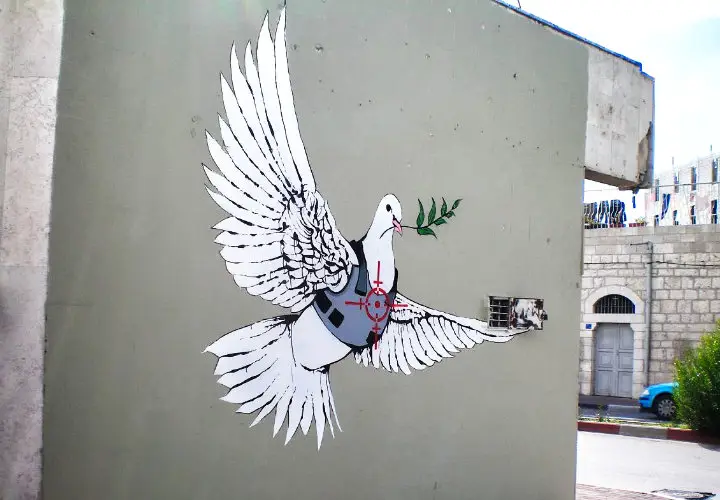
“In an era of global citizenship education, educating for peace has never been a more urgent priority.”
The approach schools adopted on the Israel-Palestine conflict lies in stark contrast to how they responded to the Russia-Ukraine war. Ukrainian flags were flown from school buildings, fundraisers and other charitable collection drives were mobilised across Scotland’s schools in support of Ukraine.
Similar solidarity initiatives for Palestinians have not only been scarce, but when individuals in our school communities have sought to organise similar, they have been met with resistance from school leaders. This opposition is rooted in fear.
From Fear to Bravery
The Israel-Palestine conflict has long been deemed controversial and it is understandable that school leaders would rather avoid the risks associated with getting to grips with it. Islamophobia and antisemitism are ugly side effects that always emerge when this conflict is in major view of the international arena. Accusations of bias and misrepresentation are also criticisms that can emerge from different quarters when we start to delve in to the historical complexities of the conflict’s origins. The fear of ‘getting it wrong’ prevents educators from engaging with the Israel-Palestine conflict.
“Our young people deserve educators who are bold and brave enough to tackle controversial issues and hold space for supported discussion of them in our schools.”
Building Political Literacy
The preference to avoid rather than engage is more detrimental to our learners than perhaps we realise. The Israel-Palestine conflict has been raging unresolved for 75 years. Fresh ideas and new approaches to conflict resolution are needed – but they won’t come from school leavers who have never heard of Israel or Palestine, let alone studied conflict resolution. In an era of global citizenship education, educating for peace has never been a more urgent priority. Young people who emerge from school ‘apolitical’ become adults who are not just also apolitical but, more alarmingly, politically illiterate. This is a dangerous precedent and will certainly not equip our young people with the skills they need to navigate an uncertain future.
Instead of silence and fear, our young people deserve educators who are bold and brave enough to tackle controversial issues and hold space for supported discussion of them in our schools. Antisemitism and Islamophobia in the context of this conflict have always been accompaniments. However, schools can be safer, braver spaces where these views are constructively challenged and corrected, so that our young people emerge from our schools in to the world outside equipped to challenge them there too. And for the members of our school communities who are directly affected by the conflict because they are Jewish, Muslim, Arab or Israeli, our failure to acknowledge what affects them and offer appropriate support, represents the polar opposite of inclusive practice.
We can and must do better.